 The Woman BossThe Woman Boss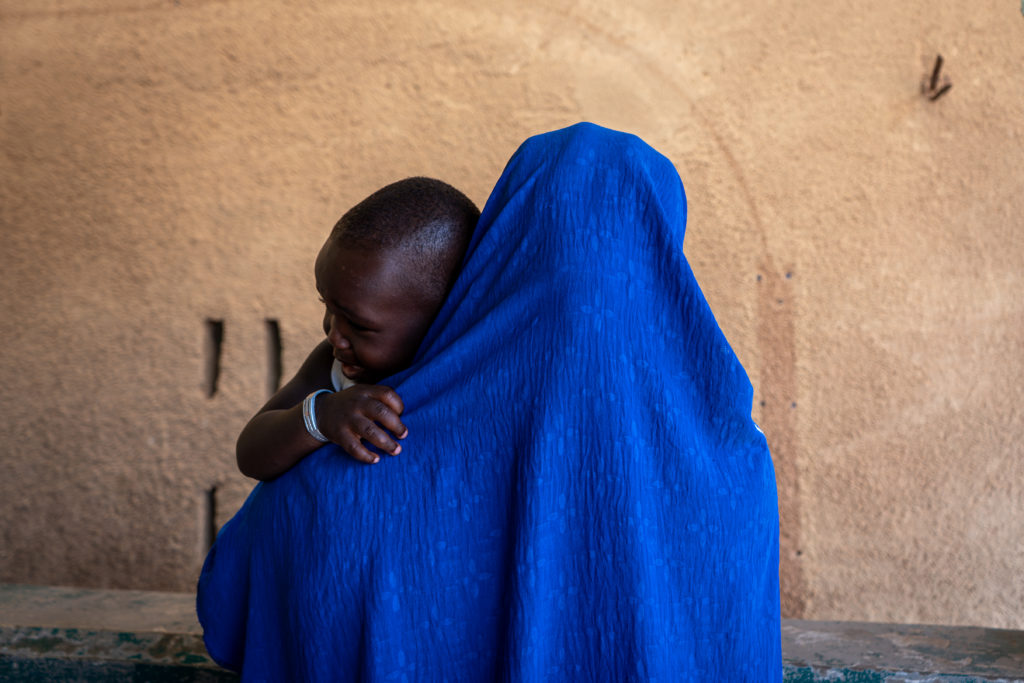
Mothers. What would we be without them? Where would we be without them? The common answer is nothing, nowhere. Without mothers, life would simply, and scientifically, not exist.
They bring life, educate us, and love us. However, sometimes, this natural act can cut their lives short. How is it possible that something that has been happening since the beginning of time is still not taken as seriously as it should?
In The Gambia, though there has been some gradual progress, maternal deceases remain a significant health concern. In fact, it is the 12th country in the world with the highest mortality rate, with 354 deaths per 100,000 live births, according to data from the World Bank. What this means is that out of 1,000 babies born, roughly 3 mothers die due to pregnancy or childbirth complications.
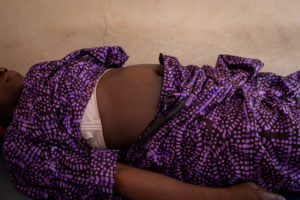
In Lamin, the largest village in the Northwestern division of Kombo, The Gambia, the Banjulinding Health Center is crowded with pregnant women, children, husbands and parents— all seeking to be exempt from such tragedy. Similar to many, they wish to arrive home with a perfectly healthy baby and mother.
What is causing maternal mortality?
Maternal mortality remains to be an immense social burden and a painful reality for thousands of women and their families. Maternal health is not just an individual issue, but an essential pillar for the strength and effectiveness of health systems worldwide.
Madi Ceesay is a nurse, midwife and sonographer —“three caps in one head” – as he claims. Throughout his career, he has worked in different regions of The Gambia and, for the past two years, has been part of the staff at the Banjulinding Health Center. In his opinion, the biggest problem is that women do not seek health services often, if at all.
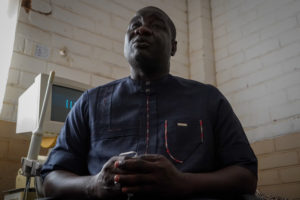
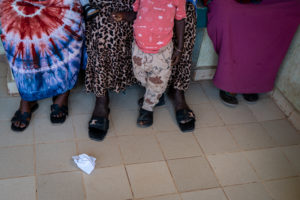
“In our clinical settings there are three types of delays”, Ceesay explains, “delay in seeking medical service, delay in reaching health facilities and then delay in interventions”. Although they correspond to three distinct spheres, these categories are deeply interconnected. A delay in any of them can trigger serious consequences and endanger women’s lives.
Arriving on time
For Abba Sanyang, a midwife and nurse that has been working with pregnant women in The Gambia for 31 years, the most important aspect is that pregnant women access health facilities on time. “You see people who come [to a first appointment] at seven months, eight months, some people even come in labour. First booking and they come in labour”.
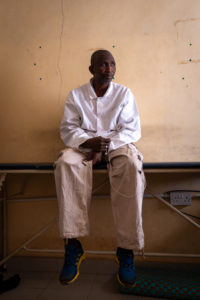
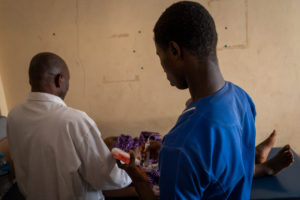
In his opinion health education is a “day-in-day-out program”, that is going across the country. “We are giving health indi cators over and over about early booking”, says Sanyang.
The WHO recommends pregnant women to have their first contact in the first 12 weeks’ gestation. Unfortunately, this is not a reality for many women in The Gambia. There are many factors that prevent them from visiting the hospital. From the personal sphere, male dominance poses a significant barrier. “Most women cannot make their own decision to go to the hospital. They prefer to wait for the husband to decide, or for the in-laws or whoever is attached to them”, explains Madi Ceesay.
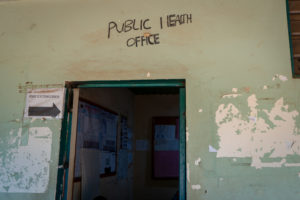
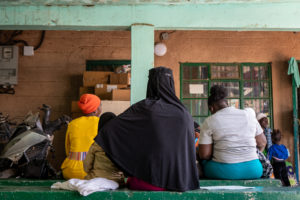
In Mr. Sanyang´s opinion, long waiting times at health centers also discourage people from seeking basic care, but he emphasizes: “Don’t think of the boring [part], think of the health”.
Identifying the risks
Behind many of the delays in seeking medical attention or arriving at a health centre on time, is the lack of information about warning signs during pregnancy. This knowledge gap can make the difference between life and death.
Isis Pereda and Sara Hernández are two Spaniard nurses and midwives that, with the support of ASEDA NGO and the ethic committee of The Gambia, are trying to find a solution to this problem.
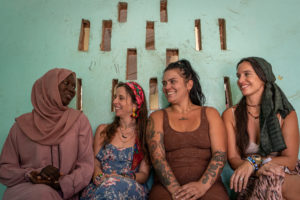
“With this project we aim to detect the problems pregnant women face, support them, and pay for blood tests, scans and medication” Sara Hernández explains. Both nurses state that in The Gambia, the cost of care remains a major barrier for pregnant women, but it is also the most viable solution. “If they have anemia they need ferrotin. However, the problem is that perhaps a women cannot afford to pay for ferrotin”, says Hernández.
For this project, women must sign a consent form where it is highlighted that costs pertaining to antenatal care are covered, including hospital visits for women with high-risk pregnancies.
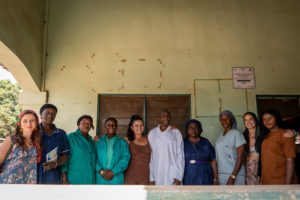
Their initiative is based on collecting data through interviewing women, tracking their pregnancies and labour, and asking them a few basic questions. “It is important to mention that each woman is assigned a number as a means to protect their data and information and ensure anonymity”, Isis Pereda clarifies.
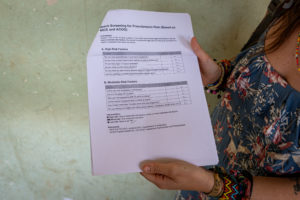
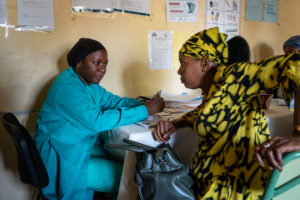
Hernández also emphasizes that by tracking the women´s family history, they are able to detect risks signs. “Here, one of the biggest problems is preeclampsia, which is high blood pressure during pregnancy. We simply interview the woman and ask if someone in their family has had this condition”, Sara explains. If they are diagnosed with preeclampsia, it can later be controlled with aspirin.
The Spaniard nurses/midwives currently tend to 1,000 women, half from the Banjulinding and the other half from New Yundum, but they clarified that “if the project goes well, we want to broaden our aid to more women”.
What needs to be done:
Maternity should be something enjoyable, not dangerous. As Isis Pereda claims, “it is true that pregnancy is a natural process… But also, it is very important to frequently check you and your baby’s health”.
Strengthening female education, empowerment, reproductive health understanding, life skill training and awareness, are fundamental steps to take to ensure the reduction of maternal mortality. As Madi Ceesay states, “trying to fight against or minimize the maternal mortality rate has to be a collective factor. This must come from the community, policymakers, government, and healthcare workers”.
Caring for maternal health saves lives, strengthens families, and builds healthier communities. By understanding risks, seeking timely care, and supporting mothers, we can prevent needless deaths and ensure a safer future for all.
Again, what would we be without our mothers?
Sara Hernández, Nurse and MidwifeWith this project we aim to detect the problems pregnant women face, support them, and pay for blood tests, scans and medication.